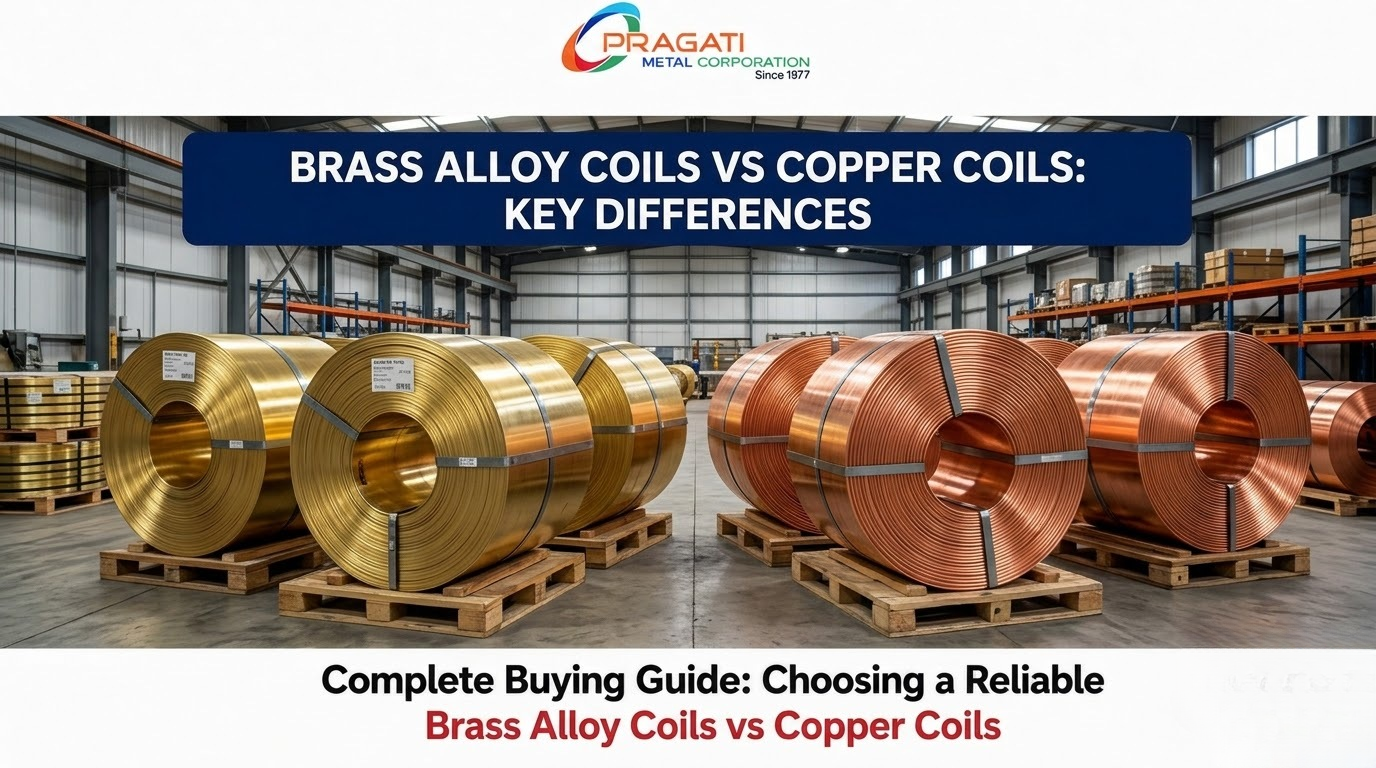

Brass alloy coils are flat-rolled products manufactured from copper-zinc alloys and supplied in coiled form for applications that require formability, corrosion resistance, conductivity and reliable mechanical performance. Different brass grades contain varying proportions of copper, zinc and, in some cases, additional alloying elements to achieve specific properties. Brass coils are used across electrical, automotive, plumbing, hardware, architectural and industrial applications. The selection of a suitable brass alloy coil depends on factors such as grade, thickness, width, temper, surface condition and application requirements. This guide explains the composition, common grades, properties, manufacturing process, applications and key considerations for selecting brass alloy coils.
What Are Brass Alloy Coils?
Brass alloy coils are coiled flat products made primarily from copper and zinc. The proportion of these elements, along with any additional alloying elements, varies according to the selected brass grade and determines properties such as strength, ductility, formability, machinability and conductivity. Brass is available in several wrought grades, each developed for particular manufacturing and service requirements.
The coil form allows manufacturers to process brass efficiently for applications involving stamping, forming, fabrication and component production. Depending on the grade and temper, brass alloy coils can provide a useful combination of corrosion resistance, electrical and thermal conductivity, formability and machinability. They are therefore used in components for electrical, automotive, plumbing, architectural and general engineering applications.
Common Brass Alloy Grades Used for Coils
Brass is available in different grades, and each grade offers a specific combination of composition, mechanical properties, formability and machinability. Common wrought brass grades include C26000, C26800, C27000 and C36000, subject to the required product form and specification.
| Brass Grade | UNS | General Characteristics | Typical Uses |
| Cartridge Brass | C26000 | Good ductility, formability and corrosion resistance | Electrical components, formed parts, hardware |
| Yellow Brass | C26800 | Good formability and general-purpose performance | Hardware, components and formed products |
| Yellow Brass | C27000 | Good formability and corrosion resistance | General engineering and fabricated components |
| Free-Cutting Brass | C36000 | Excellent machinability | Precision-machined components and fittings |
The exact availability of a grade in coil form depends on the required thickness, width, temper and applicable product specification.
Properties of Brass Alloy Coils
Alloy coils are primarily made of copper and zinc, with varying ratios of the two metals. The specific ratio determines the physical and mechanical properties of the brass produced. The common ratios used are 60/40, 70/30, and 80/20. Other metals like lead, tin, manganese, or iron can be added to enhance the properties of the alloy.
Alloy coils are popular due to their unique combination of properties. These coils are malleable, ductile, and easily worked into various shapes and sizes. They have a relatively low melting point and high conductivity, making them ideal for use in electrical wiring. Brass coils also have high corrosion resistance, which can withstand environments with high moisture content without rusting or corroding.
Applications of Brass Alloy Coils
Brass alloy coils are used to manufacture components where a combination of formability, conductivity, corrosion resistance, machinability and appearance is required.
Electrical and Electronics
Brass coils can be processed into electrical contacts, terminals, connectors and other components where suitable conductivity and formability are required.
Automotive Components
Selected brass grades are used in automotive components, including terminals, connectors, fittings and other precision-manufactured parts.
Plumbing and Hardware
Brass is widely used for fittings, valves, hardware and related components because suitable grades offer corrosion resistance, machinability and formability.
Architecture and Decorative Components
The appearance and workability of brass make suitable grades useful for decorative trims, architectural components and interior fittings.
Industrial Components
Brass coils can be processed into washers, stamped parts, fittings, electrical components and other fabricated products used in industrial equipment.
Precision Engineering
Free-machining brass grades can be used to manufacture precision components where efficient machining and dimensional consistency are important.
Advantages of Brass Alloy Coils
The use of alloy coils has many advantages. Because of its excellent corrosion resistance, brass coils do not require coating to protect them from rust. The ability of brass alloy coils to be easily formed and worked means it can save the manufacturer money on hardware, tools, and labour. Brass coils are also 100% recyclable and have excellent acoustic resonance, making them ideal for use in musical instruments.
Conclusion
Alloy coils have been around for centuries, and their properties have proven invaluable in various industries. Due to their corrosion resistance, ability to conduct electricity, and malleability, alloy coils are currently in high demand by manufacturers. By understanding the properties, composition, and uses of brass alloy coils, one can better appreciate the efforts the manufacturing industry puts into ensuring they get the best results from the raw materials.