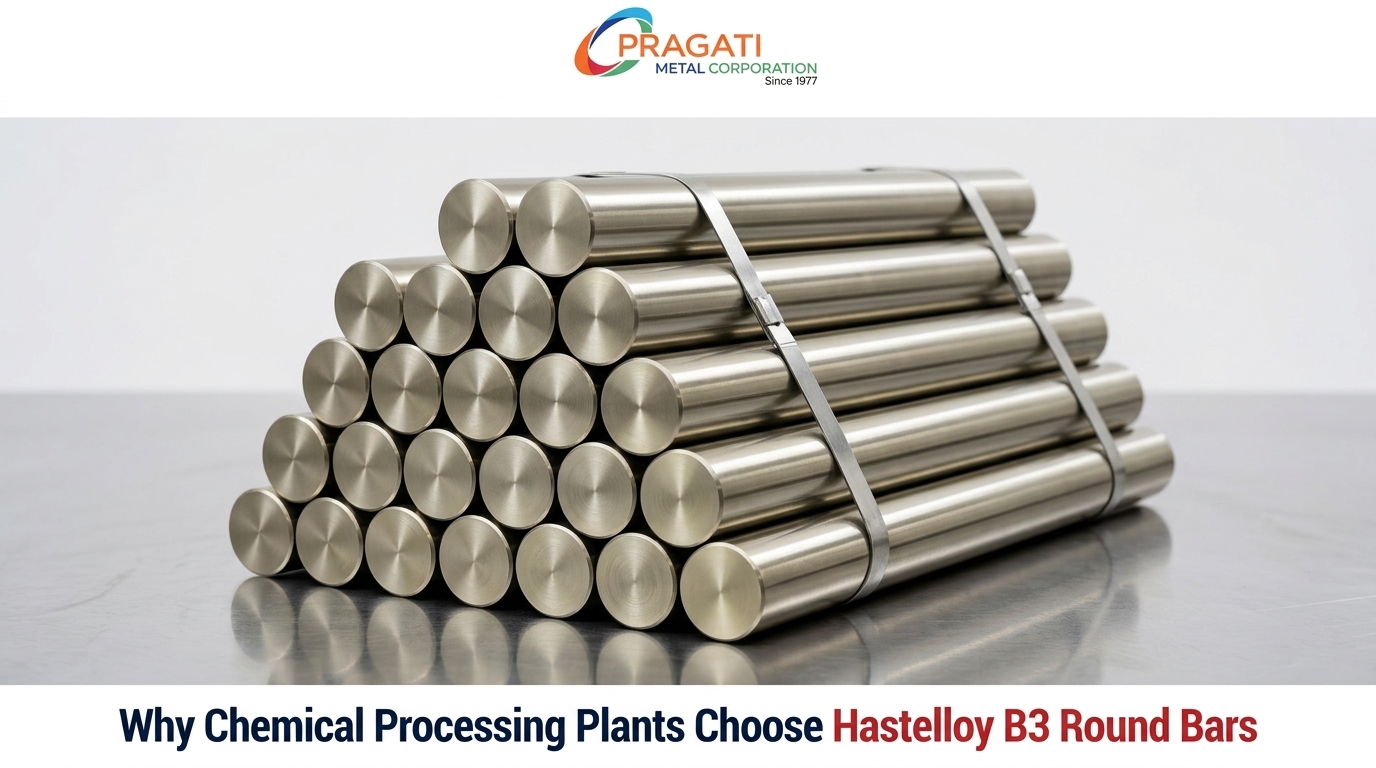
Chemical processing environments damage ordinary metals within months. Hydrochloric acid lines and sulfuric acid reactors need a material that resists attack at the molecular level, not a coating that only delays it. Hastelloy B3 Round Bars is a nickel-molybdenum alloy designed for these conditions. B3 provides resistance to reducing acids, enhanced thermal stability and longer service life than previous B-series alloys. Plant engineers specify this material for reactors and shafts where a single failure can shut down a production line.
What Are Hastelloy B3 Round Bars?
Hastelloy B3 Round Bars combine nickel and molybdenum in a composition built for withstanding reducing acid environments without pitting or cracking. The alloy improves on older B-series grades with better thermal stability during welding, so it holds up through manufacturing as well as in service. It also machines and forms without the cracking issues that limited earlier alloys. Manufactured to ASTM B335 and identified under UNS N10675, these round bars arrive with documented mechanical and chemical properties engineers can verify before installation.
Why Chemical Processing Plants Choose Hastelloy B3 Round Bars
Excellent Resistance to Reducing Acids
Hydrochloric acid and sulfuric acid attack most stainless grades within weeks of continuous exposure. Hastelloy B3 resists this attack across a wide concentration and temperature range. Plants running acid pickling lines rely on this resistance to keep equipment running without constant replacement.
Superior Corrosion Resistance
Corrosion failures rarely happen all at once. They start as pitting, then progress to wall thinning and leaks that force unplanned shutdowns. Hastelloy B3 slows this progression, cutting the frequency of corrosion-related failures.
Improved Thermal Stability
Welding exposes alloys to repeated heating and cooling cycles. Some nickel alloys crack or lose corrosion resistance in the heat-affected zone. Hastelloy B3 holds its structure through these cycles, making it workable for complex geometries like agitator shafts.
Long Equipment Service Life
The service life of round bars machined into shafts, stems and structural members is longer if the base material is resistant to corrosion and thermal degradation. That longer lifespan means maintenance crews have to pull out and replace the equipment less often.
Common Applications in Chemical Processing Plants
- Chemical reactors: Reactor walls face direct, continuous contact with reducing acids during processing.
- Heat exchangers: Tube bundles and shells handle corrosive fluids while managing heat transfer.
- Pump shafts: Shafts in acid-transfer pumps require corrosion resistance and fatigue strength.
- Valve stems: Stems cycle through corrosive media without seizing or losing sealing performance.
- Agitator shafts: Mixing shafts submerged in acid baths resist wear during continuous rotation.
- Pressure vessel components: Flanges and fittings hold pressure ratings in aggressive chemical service.
- Acid handling equipment: Piping and storage components manage concentrated acid without breakdown.
Factors to Consider Before Selecting Hastelloy B3 Round Bars
Chemical Compatibility
Match the round bar grade to the chemicals present in the process line. Hastelloy B3 suits reducing acid environments, but oxidizing conditions call for a different alloy such as Hastelloy C276.
Operating Temperature
Check that the alloy’s rated performance is adequate for the actual service temperature, including any temperature excursions that occur during startup or shutdown. Material that is good in steady state can behave differently under thermal cycling.
Size and Mechanical Requirements
Specify the correct diameter, length, and mechanical properties for the finished component. Getting these wrong at the ordering stage adds delay and cost later.
Material Certification
Request ASTM B335 compliance documentation along with Mill Test Certificates before accepting delivery. Complete traceability confirms the round bars meet the requirements the application demands.
Why Choosing a Reliable Supplier Matters
Getting Hastelloy B3 Round Bars from a reliable supplier is much more than delivery schedules. Certified material is consistent in composition and less apt to fail unexpectedly in service. Having stock in various sizes allows procurement teams to react to urgent replacement needs without having to wait for a mill run. Technical support during the selection process allows engineering teams to match the right grade to the application and complete documentation with every shipment provides traceability for audits.
Common Mistakes to Avoid
Procurement teams frequently choose materials solely on price without verifying chemical compatibility. If you skip the ASTM specification checks or accept uncertified stock, you are introducing a risk that only shows up after the component fails in service. Sometimes buyers completely miss supplier documentation and then have difficulty tracing material history when auditing. Certification and specification compliance verification before ordering prevents these issues from getting to the plant floor.
Conclusion
Hastelloy B3 Round Bars have found their way into chemical processing plants for their resistance to reducing acids, stable performance during fabrication, and a service life that reduces the frequency of replacement. The choice of certified material from a supplier who supplies composition and stock availability documentation supports reliability of equipment and predictable maintenance costs. If oxidizing conditions are required in an application, the process chemistry may be better suited for Hastelloy C276 Round Bars or Hastelloy B2 Round Bars.
Contact Pragati Metal Corporation for guidance on selecting the right Hastelloy B3 Round Bars for your chemical processing application.