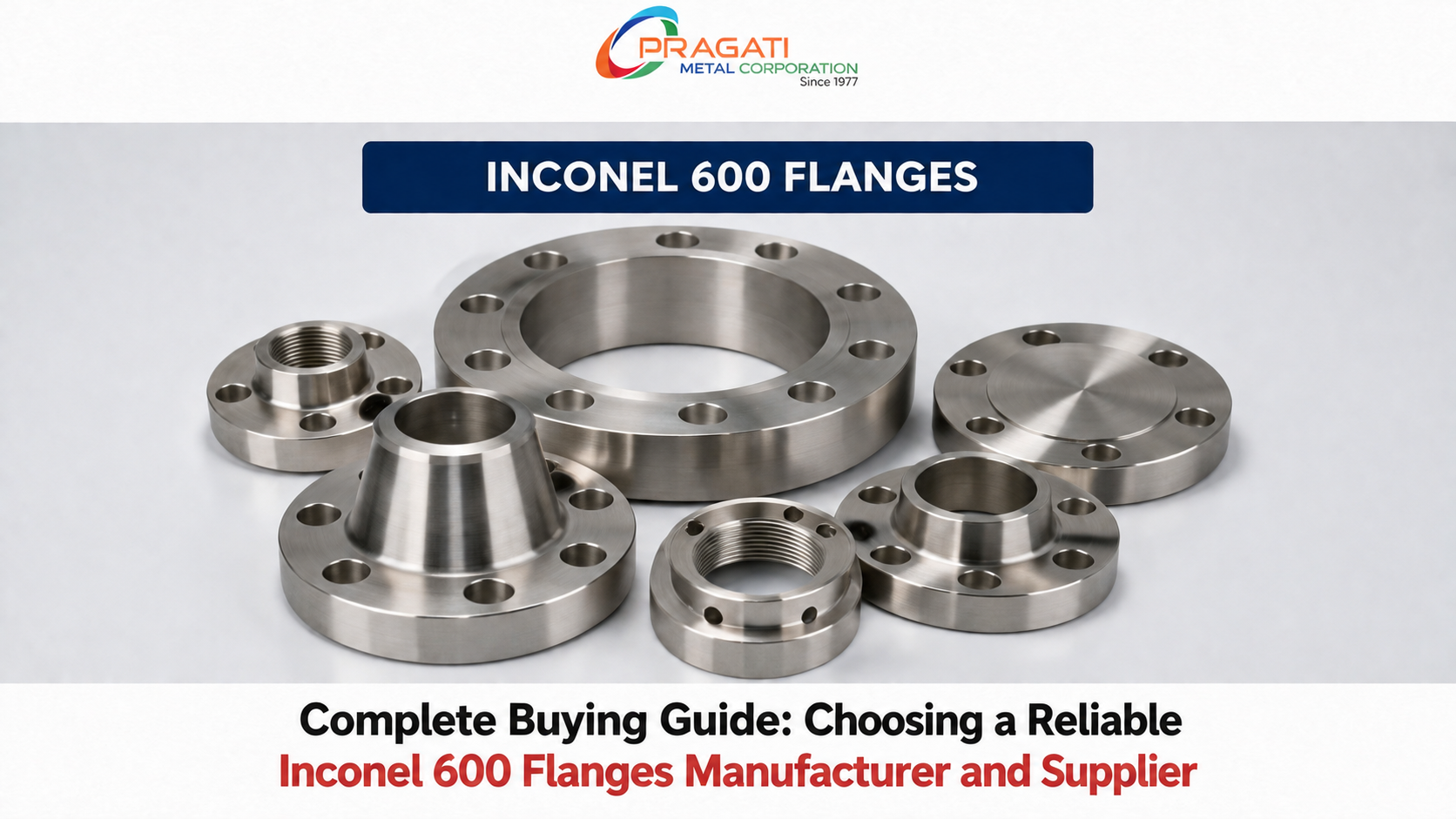
Many buyers tend to prioritize comparing flange prices over evaluating the capabilities of the manufacturer. While a lower price may appear good, it can lead to costly issues if the supplied flanges fail to meet the required quality standards or the mill test certificates do not match the specified material. Choosing a dependable Inconel 600 flange manufacturer means looking past the quote sheet at production practices, documentation, and delivery discipline. An established Inconel 600 flange supplier brings all three together, and that combination decides whether a piping project stays on schedule or gets delayed at the inspection stage.
Why the Choice of Manufacturer Matters for Industrial Projects
A flange batch that passes visual inspection can still fail in service if the underlying process control is weak. Consistency across heats matters more than any single test result. Piping systems depend on every flange in a lot performing the same way under pressure and temperature, not just the sample piece that got tested. Documentation ties directly into this, since a certificate without heat number traceability offers little protection once a flange is installed. Buyers who work with an experienced Inconel 600 flanges manufacturer tend to see fewer rejections at the site and fewer schedule slips caused by rework.
Why Inconel 600 Is Preferred for High-Performance Applications
Inconel 600 gets specified where ordinary alloys give up. Four properties explain most of that preference.
Corrosion Resistance
This nickel-chromium alloy holds up against a wide set of corrosive media, including oxidizing acids and caustic solutions, without the surface breakdown seen in standard stainless grades. Refineries and chemical lines rely on that stability where fluid composition shifts during operation.
High-Temperature Strength
The alloy keeps its mechanical integrity well above 550 degrees Celsius, which is where many carbon and stainless alternatives start to lose structural reliability. That margin matters in furnace piping and heat treatment equipment.
Oxidation Resistance
At sustained high temperatures, Inconel 600 forms a stable oxide layer instead of scaling and flaking. This protects wall thickness over long service periods and cuts down on unplanned maintenance in thermal processing lines.
Mechanical Properties
Tensile strength around 655 MPa and yield strength near 310 MPa give the alloy enough toughness for demanding joints, and this holds even in cryogenic conditions, which is not something every high-temperature alloy can claim.
Key Factors to Evaluate Before Choosing an Inconel 600 Flange Manufacturer
Choosing based on price alone ignores the variables that actually affect delivery and performance. Four factors deserve direct attention before a purchase order goes out.
Manufacturing Experience and Production Capability
Nickel alloys do not machine or forge like carbon steel. A manufacturer with years of hands-on work in this material understands heat treatment cycles, forging temperatures, and dimensional control specific to Inconel. That background shows up in consistent quality across both small trial orders and large bulk requirements, and it reduces the guesswork buyers would otherwise carry into a first order with a new Inconel 600 flanges supplier.
Compliance with Industry Standards
Flanges manufactured under ASTM B564, ASME SB564, and ANSI B16.5 give buyers a common technical language with their own client or regulator. Compliance is not paperwork for its own sake. It ensures the size, pressure levels, and material grade meet the set benchmark, streamlining internal approval for procurement and engineering teams.
Quality Control and Material Traceability
The mill test certificates verify the chemical and mechanical properties of the particular heat used. Heat number traceability ties each flange to its batch of raw material, enabling problems to be isolated rather than a blanket recall. Dimensional inspection picks up tolerance drift before shipment. Positive material identification confirms the alloy grade on the shop floor, and final checks before dispatch pick up anything the earlier stages may have missed. Combined, these steps minimize the risk of receiving a flange that does not match its documentation.
Delivery and Export Support
Production lead time affects project scheduling long before the flange reaches the site. Export packaging protects the product during transit, and correct documentation prevents customs delays at the receiving end. A supplier who can commit to a realistic timeline and back it with proper paperwork removes one of the more common causes of project slippage.
What to Verify Before Finalizing a Supplier
Before placing an order, confirm that the supplier stocks or can produce the required flange standard, size, and pressure class rather than assuming availability. Request a sample mill test certificate and determine if heat number traceability is a standard feature or an additional request. For larger contracts, third-party inspection assistance is crucial, requiring an independent agency to oversee the testing. Obtain written confirmation of production and delivery schedules, along with the capability to handle customized dimensions or non-standard setups. Export packaging and shipping documentation, including certificates of origin and packing lists, should be settled before the order is confirmed rather than after the flanges are already in transit.
Common Mistakes Buyers Should Avoid
A few recurring errors account for most of the procurement problems buyers run into with nickel alloy flanges.
Choosing a supplier based only on the lowest quoted price often leads to hidden costs from rejected batches or delayed shipments later on.
Ignoring quality certifications at the order stage means discovering gaps in documentation only after the flanges arrive at the site, which is far more expensive to fix.
Not verifying material traceability leaves buyers unable to isolate a defective batch, forcing a wider inspection of stock that was otherwise sound.
Overlooking production capacity and delivery commitments results in missed installation windows, which can push back an entire project schedule.
Failing to confirm inspection documentation before dispatch creates disputes at the receiving end, when it is far harder to resolve than at the factory gate.
Conclusion
Selecting a reliable Inconel 600 flange manufacturer and supplier comes down to verifying process, documentation, and delivery capability rather than comparing price sheets alone. Corrosion resistance and high-temperature strength make the alloy valuable, but those properties only hold up if the manufacturing and quality control behind each flange are sound. Buyers who check traceability, compliance, and export readiness before placing an order avoid most of the delays and disputes that show up later in a project. Pragati Metal Corporation manufactures and supplies Inconel 600 flanges from Mumbai, covering standard sizes and custom requirements for industrial buyers and EPC contractors.